Why Does Full-Grain Leather Cost More? (And Is It Worth It?)

You're comparing two leather bags online.
They look almost identical.
Both claim to be made from genuine leather. Both have similar designs. Yet one costs $100, while the other is priced closer to $300.
So what explains the difference?
In many cases, the answer comes down to the quality of the leather and how the bag is made.
One of the biggest reasons for that price gap is full-grain leather—a material known for its durability, natural character, and ability to age beautifully over time. But despite its popularity, many buyers still wonder whether it's genuinely worth paying more for.
The short answer is yes, but only when it's backed by quality craftsmanship and thoughtful construction.
In this guide, we'll explain why full-grain leather commands a higher price, what makes it different from other leather types, and how to decide whether it's the right investment for you.
Why Does Full-Grain Leather Cost More?

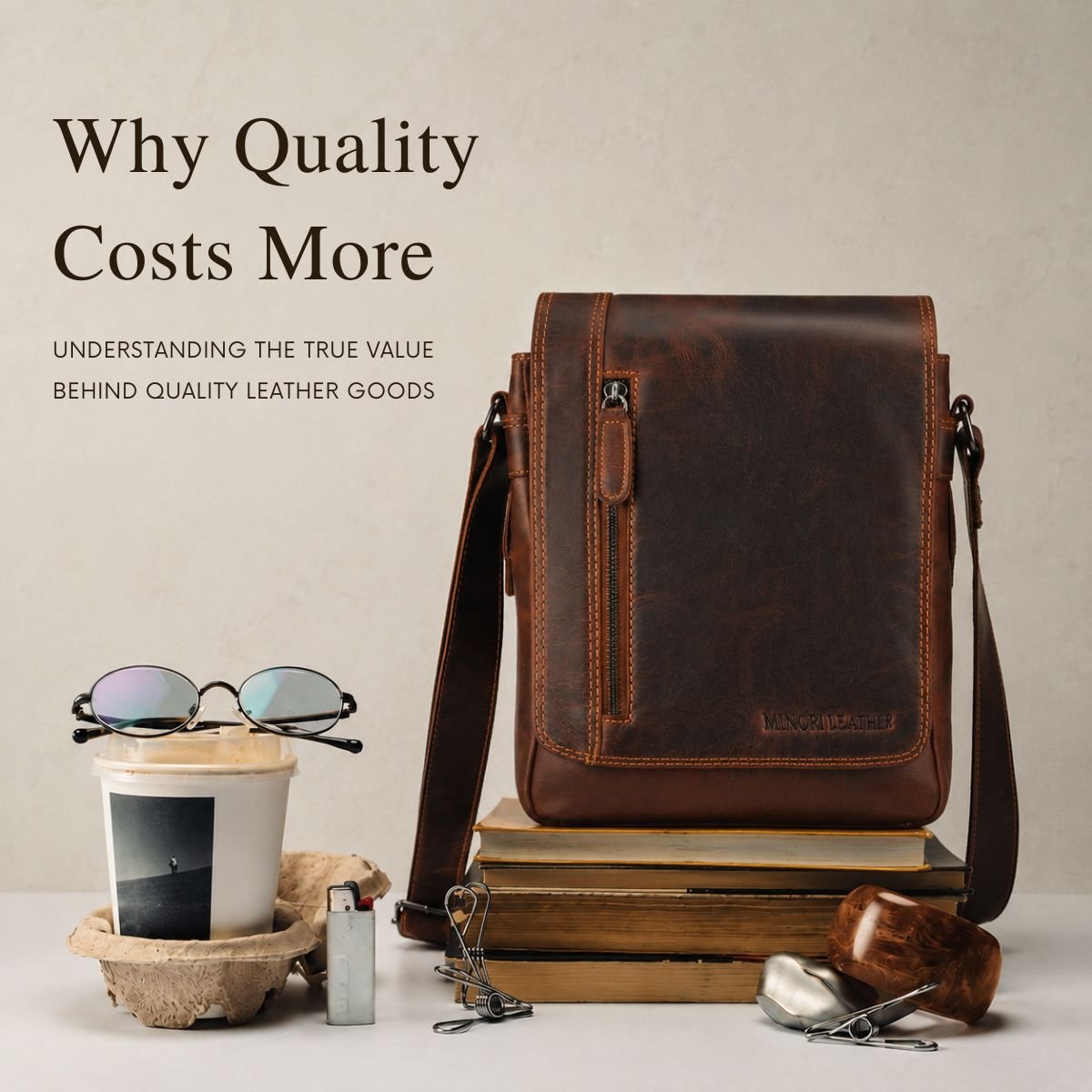
The higher price of a full-grain leather bag isn't simply about branding or marketing. It reflects the quality of the raw material, the skill required to work with it, and the fact that it's designed to last for years rather than seasons.
Here are the three biggest reasons.
1. Better Leather Starts With Better Hides
Full-grain leather is made from the top layer of the hide with its natural grain left intact.
Unlike lower-grade leathers, the surface isn't heavily sanded or coated to hide natural markings. That means manufacturers have to be far more selective about the hides they use.
Every hide is different. Some contain scars, wrinkles, or stretch marks that make them unsuitable for premium products. Choosing cleaner, stronger hides naturally increases the cost of the finished bag.
It's similar to woodworking—high-quality furniture starts with carefully selected timber, not just better craftsmanship. Leather works much the same way.
2. Skilled Craftsmanship Makes a Difference
A great leather bag isn't created by the leather alone.
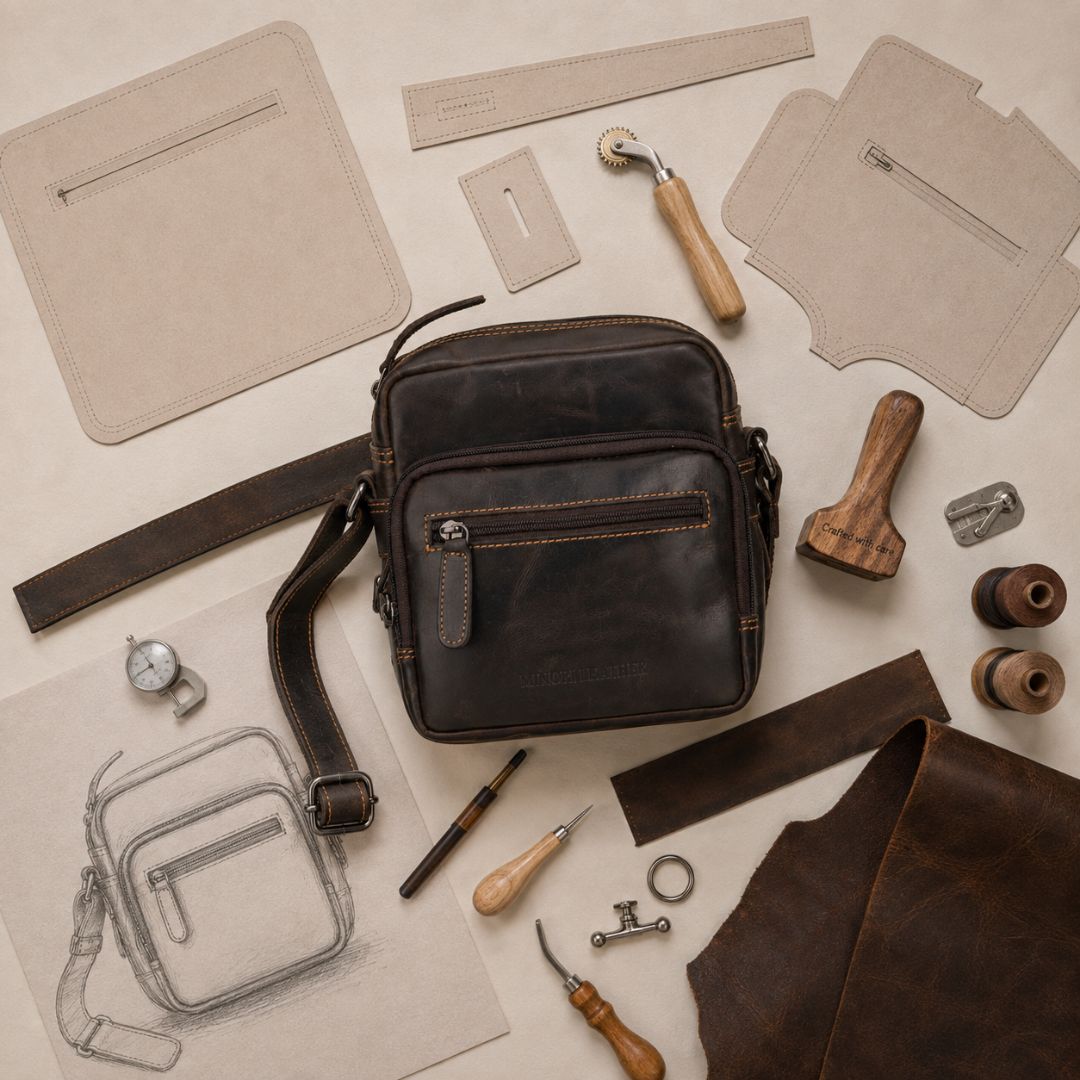
Before cutting begins, experienced craftsmen study each hide and decide which areas are best suited for large panels, straps, and smaller components. Using only the strongest sections improves durability but also means more leather is left unused.
From there, every detail matters—from clean stitching and reinforced stress points to neatly finished edges and durable hardware.
These aren't the first things most people notice when buying a bag, but they're often the reason one bag lasts for decades while another begins showing signs of wear much sooner.
3. You're Investing in Long-Term Value
One of the biggest advantages of full-grain leather is how it ages.
Instead of cracking or peeling, it develops a patina—a rich character that forms naturally through everyday use. Small creases, subtle colour changes, and a softer feel become part of the leather's story rather than signs of deterioration.
That's why many people see full-grain leather as an investment rather than an expense.
A well-made bag may cost more upfront, but if it lasts for many years, the cost of ownership is often lower than replacing cheaper bags every few seasons.
Want to learn more about how leather changes over time? Read our guide to Full-Grain Leather Patina: How It Forms (and Why You'll Love It).
So, What Is Full-Grain Leather?
Full-grain leather refers to the highest-quality layer of the hide, with the natural grain left untouched.
Because the surface isn't heavily corrected, it retains its original texture, strength, and character. This is what gives full-grain leather its distinctive appearance and allows it to develop a beautiful patina over time.
It's important to remember that "full-grain" describes the leather itself—not the overall quality of the finished product.
Two bags can both use full-grain leather and still differ significantly in construction, hardware, stitching, and long-term durability.
That's why it's always worth looking beyond the label.
Is Full-Grain Leather Worth the Extra Cost?
For many people, yes.
If you're buying a bag you expect to carry every day for years, full-grain leather offers advantages that cheaper materials often can't match.
It combines durability with character. Rather than looking worn out over time, it develops a unique appearance that's shaped by how you use it.
However, it's not the right choice for everyone.
If your priority is the lowest possible price, an ultra-lightweight bag, or a perfectly uniform finish, another material may suit your needs better.
The key isn't simply buying full-grain leather—it's buying a well-made full-grain leather bag.

How to Tell if a Full-Grain Leather Bag Is Worth the Price
Not every bag labelled "full-grain leather" offers the same level of quality.
While the leather itself plays an important role, it's only one part of a well-made bag. Construction, hardware, and craftsmanship all contribute to how the bag performs over time.
Before making a purchase, here are five things worth looking for.
1. Look Beyond the Leather Label
Terms like genuine leather, top-grain leather, and full-grain leather describe the material—but they don't tell the whole story.
A well-made full-grain leather bag should be backed by clear product information. Reputable brands typically explain the type of leather they use, its finish, and how it is expected to age.
If a product relies only on vague phrases like premium leather without offering further details, it's worth taking a closer look.
2. Examine the Construction
A quality leather bag should feel well-built from every angle.
Pay attention to details such as:
- Straight, consistent stitching
- Smooth edge finishing
- Reinforced handles and strap attachments
- Secure hardware
- A well-organised interior
These details may seem small, but they often determine how well a bag holds up after years of regular use.
3. Quality Hardware Matters
Leather usually isn't the first part of a bag to fail.
More often, it's the zipper, buckle, clasp, or shoulder strap hardware that shows wear first.
That's why many premium leather bags use dependable components such as YKK zippers, solid metal fittings, and reinforced stress points. Good hardware complements the leather and helps the entire bag age gracefully.
4. Natural Marks Are a Good Sign
Many first-time buyers assume perfectly smooth leather means better quality.
Ironically, the opposite is often true.
Because full-grain leather retains its natural surface, you may notice subtle variations in grain, small wrinkles, or slight tonal differences. These are characteristics of real leather, not manufacturing defects.
No two hides—and no two bags—are exactly alike.
5. Think About Long-Term Value, Not Just Price
A leather bag isn't something most people replace every year.
Instead of asking, "Is this bag expensive?", consider asking:
- Will it still look good in five years?
- Can it handle daily use?
- Is it made with quality materials throughout?
- Will I enjoy carrying it for years to come?
Often, these questions provide a better measure of value than the price tag alone.

Is Full-Grain Leather Worth It?
For most people looking to buy a leather bag that lasts, the answer is yes.
Its appeal goes beyond durability. Full-grain leather develops character over time, softens with use, and reflects the journey of the person carrying it. Rather than wearing out, it often becomes more distinctive with age.
That doesn't mean everyone needs full-grain leather. If you're looking for the lowest upfront cost or a bag you rarely plan to use, a less expensive material may be perfectly suitable.
But if you're investing in a piece you'll carry for years—whether for work, travel, or everyday life—full-grain leather offers a combination of strength, longevity, and character that few materials can match.
Final Thoughts
Full-grain leather costs more because producing it requires better raw materials, careful craftsmanship, and a greater focus on long-term durability.
The real value, however, isn't found in the label alone. It's found in how thoughtfully the product is made—from the leather that's selected to the stitching, hardware, and construction that hold everything together.
If you're choosing a leather bag you'll use for years, understanding these differences helps you buy with confidence rather than relying on marketing claims.
And if you're still exploring the world of leather, continue with these guides from the Minori Leather Journal:
- Full-Grain Leather Patina: How It Forms (and Why You'll Love It) – Learn why quality leather becomes more beautiful with age.
- Why Invest in High-Quality Leather Bags – Discover how craftsmanship and durability contribute to long-term value.
-
Our Leather – See how we use full-grain oil pull-up leather and why its natural character makes every bag unique.
Frequently Asked Questions
Is full-grain leather real leather?
Yes. Full-grain leather is real leather made from the top layer of the hide with its natural grain left intact.
Does full-grain leather scratch easily?
It can develop light surface marks because it isn't covered with thick artificial coatings. Many of these marks blend into the leather over time, especially on oil pull-up leather, becoming part of its natural patina.
How long does full-grain leather last?
With proper care, a well-made full-grain leather bag can last for decades. Longevity depends on both the quality of the leather and the overall construction of the bag.
Is full-grain leather better than genuine leather?
"Full-grain" refers to a specific type of leather that retains its natural grain, while "genuine leather" simply means the product contains real leather. By itself, the term "genuine leather" doesn't indicate a particular quality level.


Leave a comment
This site is protected by hCaptcha and the hCaptcha Privacy Policy and Terms of Service apply.