
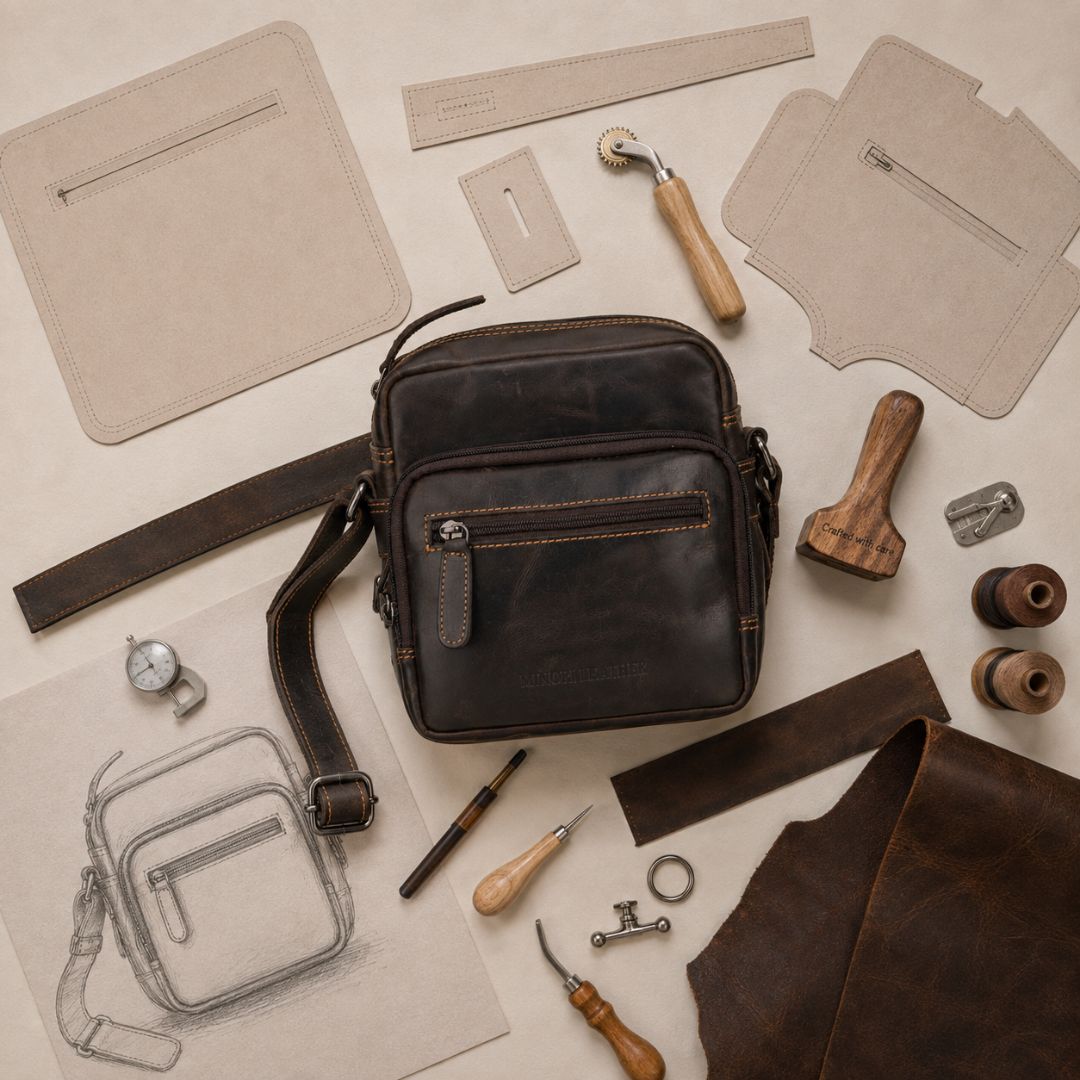
Behind Every Handcrafted Minori Leather Bag: The Craftsmanship Behind Every Stitch
Most people judge a leather bag within seconds.
They notice its colour, silhouette, the feel of the leather, or how well it complements their style. Some may check the compartments or test the zipper before making a decision.
What they rarely see is everything that happened before the bag reached their hands.
Behind every well-crafted leather bag are hundreds of small decisions. The leather must be carefully selected, every panel precisely cut, every stitch accurately placed, and every component assembled with care. While the finished product may appear effortless, the process behind it is anything but.
This is especially true of handcrafted leather bags, where craftsmanship isn't defined by a single technique. It comes from the consistency, skill, and attention given to every stage of the bag-making process—from selecting the leather and cutting individual panels to stitching, assembly, edge finishing, and final inspection.
At Minori Leather, we believe understanding how a leather bag is made helps you appreciate not only the finished product, but also the materials, experienced artisans, and craftsmanship behind it.
Whether you're buying your first leather bag or adding another to your collection, here's a closer look at what goes into creating a handcrafted leather bag that's designed to be used, appreciated, and carried for years.
Why Craftsmanship Matters in Handcrafted Leather Bags
 Leatherworking is one of the oldest crafts in the world, yet many of the principles behind quality craftsmanship remain unchanged.
Modern technology has undoubtedly improved efficiency. Machines can assist with cutting, stitching, and repetitive tasks, making production faster and more consistent. However, leather is a natural material, and working with it still requires judgement, experience, and attention to detail.
Unlike synthetic materials, no two leather hides are exactly the same. Each one has its own grain pattern, texture, and natural characteristics. Experienced artisans learn to understand these differences and work with them rather than against them.
That human judgement influences countless decisions throughout the making process.
Which section of the hide should become the front panel of the bag?
How should the natural grain flow across different pieces?
Are the stitch lines precisely aligned?
Does every edge have a clean, consistent finish?
Individually, these decisions may seem insignificant. Together, they determine how refined the finished bag looks, how comfortably it functions, and how well it performs through years of everyday use.
Craftsmanship isn't about making a leather bag as quickly as possible. It's about making thoughtful decisions at every stage so the finished product reflects quality, precision, and consistency.
The Details That Define a Well-Made Leather Bag
When people compare handmade leather bags, they often focus first on obvious differences such as colour, size, or style. Those features certainly matter, but many of the details that distinguish a well-made leather bag are much less noticeable.
Ironically, the details that matter most are often the ones people only notice when they're missing.
Consistent Leather Bag Stitching
Most people don't count the stitches on a leather bag.
They do, however, notice when seams begin to loosen or when stitch lines appear uneven.
Consistent stitching isn't simply about appearance. Straight, evenly spaced stitches contribute to the overall construction of the bag and reflect the care taken during assembly. They help create clean lines, balanced panels, and a finished product that looks as carefully made as it was designed.
Good stitching doesn't demand attention—it quietly does its job every day.
Carefully Finished Edges
Take a closer look at the edges of a leather bag.
These are the areas your hands interact with most often—along the handles, flap, pockets, and openings. They are also exposed to everyday friction every time the bag is carried, opened, or placed on a surface.
Well-finished edges create a cleaner appearance and contribute to the overall refinement of the product. They reflect the attention given during the finishing stages, where even small details are carefully considered.
Balanced Proportions
A leather bag should feel balanced before you even place anything inside it.
The position of the handles, the length of the strap, the placement of pockets, and the proportions of the overall design all influence how naturally the bag feels in everyday use.
These decisions are made long before production begins, but they significantly affect comfort and functionality once the bag becomes part of someone's daily routine.
Good design rarely calls attention to itself because everything simply feels intuitive.
Hardware That Works Seamlessly
Zippers, buckles, magnetic closures, rivets, and other hardware serve practical purposes, but they also contribute to the overall experience of using a leather bag.
When hardware is carefully positioned and properly installed, it operates smoothly while complementing the design rather than distracting from it.
These are the kinds of details many people never consciously notice—but they appreciate them every time they use the bag.
It All Starts With the Leather
Before a leather bag can be designed, stitched, or assembled, one decision matters more than any other: choosing the right leather.
The quality of the finished product can never exceed the quality of the material it begins with.
At Minori Leather, every bag is crafted using premium full-grain oil pull-up leather.
Full-grain leather is widely regarded as one of the highest grades of leather because it retains the natural grain and surface of the hide instead of being heavily sanded or corrected. Preserving this natural surface helps maintain the leather's strength while allowing its distinctive grain and texture to remain visible.
This natural character is particularly important in handcrafted leather bags, where the grain, texture, and subtle variations of the hide become part of the finished design.
One of the characteristics that surprises first-time buyers is that no two pieces of full-grain leather look exactly alike.
Some hides display tighter grain patterns, while others show subtle wrinkles or natural growth marks. These variations aren't manufacturing defects—they're natural characteristics of genuine leather.
For many people, these subtle differences are part of what makes full-grain leather so appealing. They give every bag its own individual character before it's even carried for the first time.
If you'd like to understand more about how leather is selected, what makes full-grain leather different, and why we choose oil pull-up leather for our products, explore Our Leather, where we take a deeper look at the materials behind every Minori Leather bag.
How Full-Grain Leather Develops Character Over Time
Unlike many synthetic materials that remain largely unchanged throughout their lifespan, full-grain oil pull-up leather continues to develop as it's used.
As the leather bends, flexes, and is handled over time, the oils within the hide naturally move, creating subtle shifts in tone and texture. Gradually, the leather develops what is known as a patina—a natural ageing process that reflects years of everyday use.
Rather than making the leather look worn, a well-developed patina often adds depth and character, giving each bag an appearance that's unique to its owner.
It's one of the reasons leather enthusiasts often describe full-grain leather as a material that improves with age rather than simply getting older.
If you're interested in learning more about this process, our article on Full-Grain Leather Patina: How It Forms and Why You'll Love It explores how patina develops and why it's considered one of the most desirable characteristics of quality leather.
More Than a Material
Choosing quality leather is only the beginning.
Even the finest full-grain leather depends on thoughtful design, experienced artisans, skilled craftsmanship, and careful construction to become a leather bag that's built for everyday life.
Designing a Bag Before It’s Built
A well-crafted leather bag doesn’t begin with stitching.
It begins with asking the right questions.
Who is this bag designed for? What will they carry every day? How can the bag remain practical without becoming bulky? Where should frequently used items be placed so they’re easy to reach? How can the design remain timeless rather than following short-lived trends?
Every bag starts with these considerations before the first piece of leather is ever cut.
At Minori Leather, we believe good design is about solving everyday problems through simplicity. Rather than adding unnecessary compartments or decorative details, we focus on creating layouts that feel intuitive to use while maintaining a clean, timeless aesthetic.
For handcrafted leather bags, these early design decisions also influence the making process that follows—from the shape and placement of individual leather panels to the position of pockets, straps, closures, and hardware.
The result is a bag that’s designed to become part of everyday life—not just something that looks good on a shelf.
If you’re trying to decide which type of leather bag best suits your needs, our guide on How to Choose the Right Leather Bag for Your Lifestyle can help you compare different styles based on how you work, travel, and carry your everyday essentials.
Meet the Artisans Behind Every Minori Leather Bag

Once the design is finalised, the making process begins.
Every Minori Leather bag is crafted by experienced artisans who have spent years refining their techniques. While specialised tools assist at different stages of production, craftsmanship still depends on the skill, patience, and attention to detail of the people using them.
Leather is a material that rewards experience. Knowing how it responds to cutting, stitching, folding, and finishing comes from years of working with it. That experience helps artisans recognise the subtle details that contribute to a well-made product.
Throughout production, each bag moves through multiple stages—from preparing leather panels and assembling components to installing hardware, finishing edges, and carrying out the final quality inspection.
Every stage is completed with care before the bag progresses to the next.
Behind every finished Minori Leather bag is a team of artisans whose work often goes unnoticed, yet whose craftsmanship is visible in every stitch, every edge, and every carefully assembled detail.
If you’d like to learn more about the journey behind Minori Leather, our values, and the people who continue to shape the brand, visit Our Story.
How a Handcrafted Leather Bag Is Made: From Hide to Finished Bag

Although every design is different, creating a handcrafted leather bag involves a carefully planned process in which each stage builds on the one before it.
From selecting the leather and cutting individual panels to stitching, assembly, hardware installation, edge finishing, and final inspection, attention to detail remains important from beginning to end.
Here’s a closer look at the leather bag-making process behind every Minori Leather bag.
1. Selecting the Leather
Every bag begins with carefully selected full-grain oil pull-up leather. Each hide is examined for its grain, texture, consistency, and suitability before production begins.
Because leather is a natural material, different areas of a hide can vary in appearance and character. Careful selection helps determine which sections are best suited to the individual components of the bag.
2. Pattern Cutting
Prepared patterns are used to cut individual leather panels with precision.
Accurate cutting is essential because these separate pieces must align correctly during construction. The shape and dimensions of each panel ultimately contribute to the structure, proportions, and overall appearance of the finished bag.
3. Preparing the Leather
Before construction begins, the individual leather pieces are prepared according to the design.
This may include trimming, reducing bulk where multiple layers meet, and preparing edges so the components can come together with a clean, refined finish.
4. Stitching and Assembly
Once the components have been prepared, they are carefully assembled to create the structure of the bag.
Precise alignment and consistent stitch spacing help create clean seams, balanced panels, and a well-constructed finished product.
This is one of the stages where the experience of the artisan becomes particularly important, as multiple individual components must come together according to the intended design.
5. Installing the Hardware
Zippers, buckles, rivets, magnetic closures, and other hardware are installed according to the design.
Each component has a functional purpose, but its placement also influences the appearance and everyday usability of the bag. Careful installation helps ensure the hardware works reliably while complementing the overall design.
6. Edge Finishing
Exposed leather edges are carefully finished to create a clean, refined appearance while helping protect areas that experience regular handling and friction.
It’s a subtle detail, but one that contributes significantly to how polished the finished bag looks.
7. Final Quality Inspection
Before every Minori Leather bag leaves the workshop, it undergoes a final quality inspection.
Construction, stitching, hardware, alignment, and overall finish are reviewed to ensure the bag meets our quality standards.
Only then is it ready for its next journey.
Why Handcrafted Leather Bags Take Time
One question people often ask is why handcrafted leather bags generally take longer to produce than mass-produced alternatives.
The answer isn't a single step—it's the combination of many.
Every handcrafted bag passes through multiple stages, each requiring careful attention before the next can begin. Leather is selected, patterns are cut, individual components are prepared, the bag is assembled, hardware is installed, edges are finished, and the completed product is inspected before leaving the workshop.
Unlike production methods designed primarily to maximise speed and volume, handcrafted production allows time for greater attention to detail throughout the making process.
The objective isn't simply to finish a bag.
It's to finish it well.
That investment of time is one of the reasons handcrafted leather goods continue to be valued by people who appreciate quality materials, thoughtful construction, and attention to detail.
If you've ever wondered why two leather bags can differ significantly in price despite looking similar, our article Why Some Leather Bags Cost $70... and Others $300 explores the materials, craftsmanship, and construction choices that can contribute to the difference.
Built to Be Used, Designed to Age With Character
 A handcrafted leather bag isn't created to remain in perfect condition forever.
It's designed to become part of everyday life.
It will travel with you to work, accompany you on holidays, sit beside you in cafés, and carry the items you rely on every day. Along the way, full-grain leather will naturally respond to handling and use, gradually developing changes in tone, texture, and character.
Rather than expecting a quality leather bag to remain completely unchanged, part of owning full-grain leather is appreciating the way the material evolves over time.
Those natural changes are part of what makes full-grain leather so distinctive.
Looking after your leather bag helps preserve its appearance while allowing it to age naturally. Simple habits—such as storing it properly, keeping it clean, and conditioning the leather when needed—can help maintain its appearance and condition over time.
If you'd like to learn more about choosing, understanding, and caring for leather bags, you may also enjoy:
Each guide explores a different aspect of choosing, caring for, and understanding leather goods.
Why Craftsmanship Matters
A leather bag is easy to admire once it's finished.
What isn't always visible is everything that came before it: the carefully selected leather, thoughtful design decisions, precise cutting and stitching, years of artisan experience, and attention given to the smallest finishing details.
Individually, these elements may seem small. Together, they shape how a leather bag looks, feels, functions, and develops through everyday use.
Craftsmanship isn't defined by a single technique or one particular stage of production. It's reflected in the care and consistency applied throughout the process—from selecting the leather and preparing individual panels to assembly, edge finishing, hardware installation, and final inspection.
That's why a well-crafted leather bag is more than a collection of stitched panels and hardware. It's the result of materials, design, experience, and time coming together to create something made for everyday use.
The next time you pick up a leather bag, take a closer look.
Notice the natural grain of the leather. Run your hand along the finished edges. Look at the stitching, open the compartments, and consider how the bag feels when you carry it.
Behind those details is a process that began long before the finished bag reached your hands.
At Minori Leather, every bag reflects that journey—from carefully selected full-grain leather and thoughtful design to experienced artisans and careful construction at every stage.
And while the making process may end in the workshop, the character of a full-grain leather bag continues to develop with the person who carries it.
Frequently Asked Questions About Handcrafted Leather Bags
What makes a handcrafted leather bag different?
A handcrafted leather bag involves experienced artisans throughout multiple stages of production, including leather preparation, cutting, stitching, assembly, finishing, and final inspection. The difference lies in the skill and attention applied throughout the making process.
How are handcrafted leather bags made?
The process typically includes selecting the leather, cutting and preparing individual panels, stitching and assembly, installing hardware, finishing the edges, and completing a final quality inspection.
What leather does Minori Leather use?
Minori Leather bags are crafted from full-grain oil pull-up leather, which retains the natural grain and character of the hide. Variations in grain, texture, and natural markings are part of the material's character.
Related reading: Our Leather
Are handmade leather bags and handcrafted leather bags the same?
The terms are often used interchangeably. Neither necessarily means every production step is performed entirely by hand; specialised tools may assist artisans during different stages of production.
Why do handcrafted leather bags often cost more?
Price can reflect the quality of the leather and hardware, construction, finishing, design, artisan involvement, and quality-control process.
Related reading: Why Some Leather Bags Cost $70... and Others $300



Leave a comment
This site is protected by hCaptcha and the hCaptcha Privacy Policy and Terms of Service apply.