
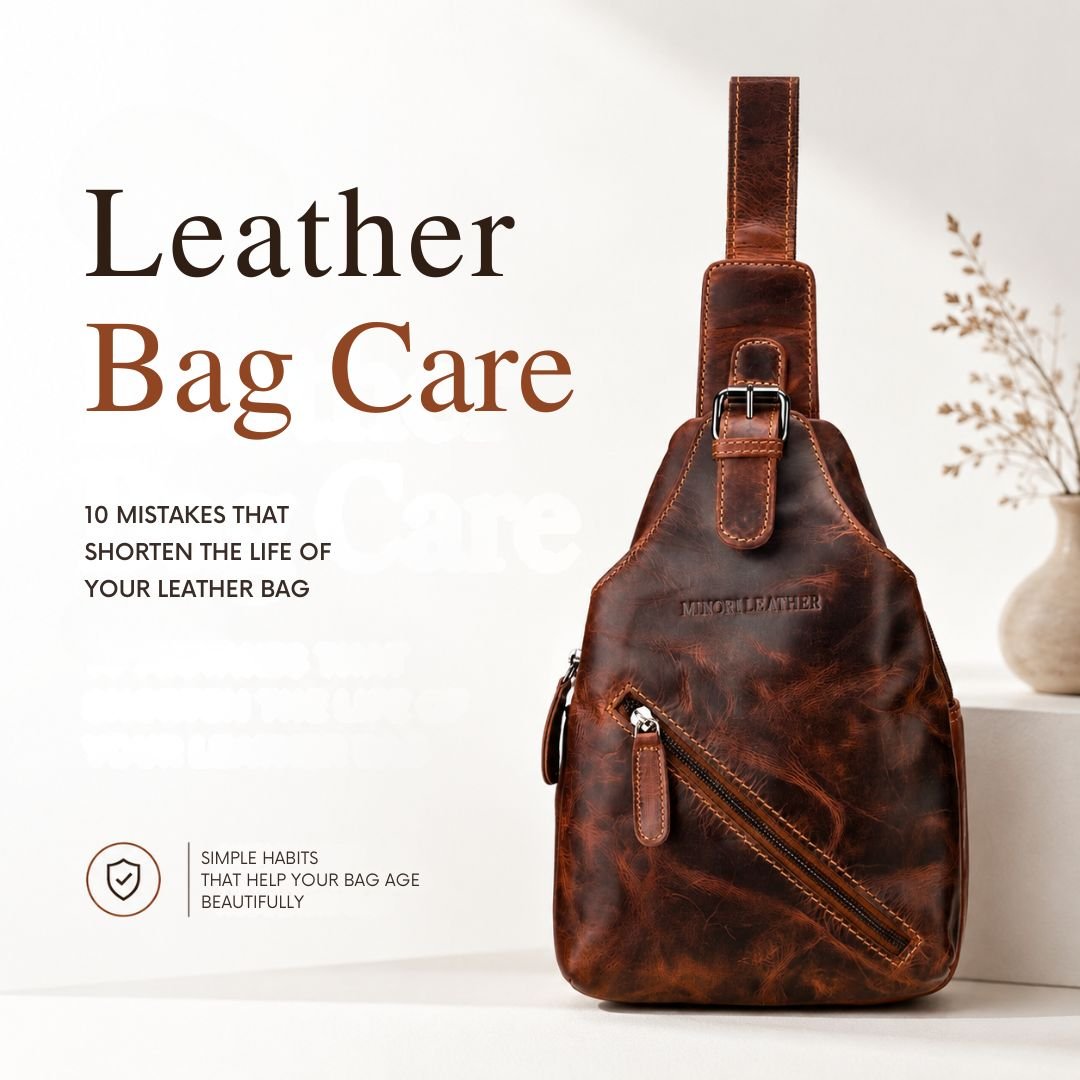
Leather Bag Care: 10 Mistakes That Shorten the Life of Your Leather Bag
A well-crafted leather bag is built to last—but only if it's cared for properly. Discover the everyday mistakes that quietly shorten the life of genuine leather and learn how to keep your bag looking its best for years to come.

Introduction
A quality leather bag isn't designed to be replaced every few years.
Unlike many synthetic materials that deteriorate through peeling or surface breakdown, full-grain leather is made to age gracefully. With regular use, it develops a rich patina—a natural deepening of color and character that makes every bag uniquely yours.
Learn more about how full-grain leather develops its natural patina.
Yet many leather bags begin showing signs of premature wear long before they should. The reason is rarely the leather itself. More often, it's the result of everyday habits that slowly weaken the material over time.
Carrying excessive weight, leaving your bag in direct sunlight, cleaning it with unsuitable products, or storing it incorrectly may seem harmless at the moment. But repeated exposure to these conditions can gradually dry the leather, weaken the stitching, distort the shape, and reduce the bag's overall lifespan.
The good news is that good leather care doesn't require expensive products or complicated routines. A few simple habits can make a remarkable difference.
In this guide, we'll cover 10 common leather bag care mistakes, explain why they matter, and show you how to help your leather bag age beautifully for years to come.
Why Quality Leather Can Last for Decades
One of the reasons people invest in genuine leather is its longevity.
Full-grain leather retains the strongest and most durable layer of the hide, giving it exceptional strength while allowing it to develop a beautiful patina through everyday use. Unlike materials that simply wear out, quality leather evolves over time, becoming softer and more distinctive with proper care.
However, leather is still a natural material. Heat, excessive moisture, harsh cleaning products, and poor storage can gradually reduce the oils and waxes that help keep it flexible. When this happens, the leather may become dry, stiff, or more susceptible to cracking and premature wear.
The key isn't constant maintenance—it's avoiding the habits that place unnecessary stress on the leather.
If you're interested in how genuine leather develops its unique appearance over time, read our guide on Full-Grain Leather Patina: How It Forms and Why You'll Love It.

1. Overloading Your Leather Bag
Every leather bag is designed with a practical carrying capacity. Repeatedly filling a compact crossbody or shoulder bag with laptops, heavy books, water bottles, or bulky electronics places unnecessary stress on both the leather and its construction.
Over time, excess weight can stretch the leather, strain the stitching, distort the bag's shape, and weaken the handles or shoulder straps. Once leather has stretched significantly, it rarely returns completely to its original form.
During construction, most quality leather bags are reinforced at high-stress points such as strap attachments and handles. However, even reinforced stitching has limits when a bag is consistently overloaded.
Best Practice
-
Carry only the essentials your bag was designed to hold.
-
Choose a dedicated laptop or work bag for heavier loads.
-
Distribute weight evenly to reduce strain on one side of the bag.
A leather bag maintains its shape—and ages more gracefully—when it isn't constantly pushed beyond its intended purpose.
2. Leaving Your Bag in Direct Sunlight or Heat
Leather handles everyday outdoor use well, but prolonged exposure to heat is another story.
Leaving your bag on a sunny windowsill, inside a parked car, or next to a radiator gradually dries the leather by reducing the oils that help keep it supple. Over time, this can lead to fading, stiffness, uneven coloring, and eventually surface cracking.
For oil pull-up leather, excessive heat may also reduce the rich tonal movement that gives the leather its distinctive vintage character.
Best Practice
-
Store your bag in a cool, shaded place when not in use.
-
Avoid prolonged exposure to direct sunlight and high temperatures.
-
Never leave leather inside a hot vehicle for extended periods.
Natural aging creates character. Excessive heat accelerates deterioration.
3. Cleaning Leather with Household Products
When your bag gets dirty, it can be tempting to reach for baby wipes, alcohol wipes, dish soap, or an all-purpose cleaner.
Unfortunately, many household products are not formulated for genuine leather. Some contain detergents, alcohol, or other ingredients that gradually strip away the protective oils and finishes that help leather remain flexible.
The damage isn't always immediate, but repeated use can leave leather feeling dry, dull, or stiff.
Best Practice
-
Remove dust regularly using a clean microfiber cloth.
-
Use a leather cleaner specifically formulated for your type of leather when deeper cleaning is necessary.
-
Always test a new cleaning product on a small, hidden area before applying it to the entire bag.
Different leather finishes require different care. Products suitable for smooth full-grain leather may not be appropriate for suede, nubuck, or oil pull-up leather.
4. Never Conditioning the Leather
Just as leather gradually develops character through use, it also slowly loses some of the natural oils and waxes that help keep it flexible.
Without occasional conditioning, leather may begin to feel dry, appear dull, or develop fine cracks in areas that bend frequently, such as handles, flap edges, and strap attachments.
Conditioning isn't about making leather shiny—it's about helping maintain its flexibility.
Best Practice
Condition your leather bag only when it begins to feel noticeably dry or less supple.
Before applying any conditioner:
-
Choose one that's suitable for your specific leather type.
-
Test it on a concealed area first.
-
Allow the test spot to dry completely before treating the rest of the bag.
Some conditioners can slightly darken or change the appearance of leather, particularly on lighter colors or oil pull-up finishes.
If your bag is made from oil pull-up leather, you'll find more detailed care advice in our guide on How to Care for Your Oil Pull-Up Leather Bag Without Losing Its Character.
5. Conditioning the Leather Too Often
While conditioning is important, more isn't always better.
Leather can absorb only a limited amount of conditioner. Applying it too frequently or in excessive amounts may leave residue on the surface, attract dust, or soften structured leather more than intended.
Many leather owners condition their bags simply because they think they should—not because the leather actually needs it.
Best Practice
Rather than following a fixed schedule, pay attention to the condition of the leather itself.
If it still feels soft, balanced, and healthy, additional conditioner is usually unnecessary.
When conditioning is needed, apply a thin, even coat and allow the leather time to absorb it naturally.
Remember, the goal is to maintain leather's natural flexibility—not to saturate it.
6. Storing Your Leather Bag Incorrectly
A leather bag can lose its shape even when it's not being used.
Storing it folded, crushed under other items, or sealed inside a plastic bag places unnecessary stress on the leather and can lead to permanent creases, trapped moisture, or mildew. Even hanging a heavy bag by its straps for months can gradually stretch the handles and distort its shape.
Best Practice
-
Empty your bag before storing it.
-
Lightly fill it with acid-free tissue paper or a soft cotton cloth to help maintain its shape.
-
Store it upright in a breathable cotton dust bag.
-
Keep it in a cool, dry, and well-ventilated space.
For a complete storage guide, read How to Store Leather Bags So They Last for Years in the Minori Leather Journal.
7. Letting Water or Spills Sit on the Leather
Genuine leather isn't completely waterproof. While a few raindrops are rarely a problem, leaving moisture or spills on the surface for too long can increase the risk of water marks, stiffness, discoloration, or mildew.
The biggest mistake isn't getting the bag wet—it's drying it incorrectly.
Using a hair dryer, heater, or placing the bag in direct sunlight can remove the natural oils that help keep the leather flexible.
Best Practice
-
Blot excess moisture gently with a clean microfiber cloth.
-
Let the bag air dry naturally at room temperature.
-
Avoid direct heat while drying.
-
Condition the leather only if it feels noticeably dry after it has completely dried.
For more detailed advice, see Is Leather Waterproof? The Truth About Protecting Your Leather Bags from Water Damage.
8. Hanging Your Bag by the Straps for Long Periods
Hanging a leather bag on a hook overnight is unlikely to cause damage. Leaving it hanging for weeks or months is a different story.
The bag's weight remains suspended from the handles or shoulder straps, placing continuous tension on the stitching, rivets, and attachment points. Over time, this may stretch the straps and affect the bag's original shape.
Best Practice
-
Store your bag upright on a shelf whenever possible.
-
Keep removable straps inside the bag or laid flat beside it.
-
Avoid storing heavy bags while they're still full.
Small changes in storage can significantly reduce unnecessary stress on the leather and hardware.
9. Waiting Too Long to Treat Stains
Leather is naturally porous, which means certain substances can penetrate the surface if left untreated.
Coffee, ink, makeup, oils, and food spills become much more difficult to remove once they've had time to settle into the leather. Trying aggressive home remedies afterward often causes more damage than the original stain.
Best Practice
-
Deal with spills as soon as possible.
-
Blot—don't rub—the affected area.
-
Use leather-safe cleaning products when necessary.
-
For stubborn ink or oil stains, seek professional leather cleaning instead of experimenting with household products.
Quick action usually prevents a minor stain from becoming a permanent mark.
10. Ignoring Early Signs of Wear
Many leather bags don't fail because of one major accident—they wear out because small issues go unnoticed.
Loose stitching, dry edges, worn strap attachments, or damaged hardware are often easy to repair when caught early. Left unchecked, however, these minor issues can gradually become larger structural problems.
A quick inspection every few weeks can help you identify small concerns before they require expensive repairs.
Best Practice
Check your bag occasionally for:
-
Loose stitching
-
Worn strap attachments
-
Dry or stiff areas
-
Damaged hardware
-
Excessive corner wear
Addressing small repairs early is often the easiest way to extend the life of your leather bag.

Quick Leather Bag Care Checklist
|
✅ Do |
❌ Don't |
|
Carry only the weight your bag is designed for |
Overload the bag every day |
|
Store it upright in a breathable dust bag |
Store it in plastic bags |
|
Clean with leather-safe products |
Use alcohol, bleach, or household cleaners |
|
Condition only when the leather needs it |
Apply conditioner too frequently |
|
Keep it away from prolonged heat |
Leave it inside a hot car or in direct sunlight |
|
Blot spills immediately |
Rub stains aggressively |
|
Air dry naturally |
Use a hair dryer or heater |
|
Inspect your bag regularly |
Ignore loose stitching or damaged hardware |
Frequently Asked Questions
How often should I condition a leather bag?
There isn't a universal schedule. Condition your leather bag when it begins to feel dry or loses some of its natural softness. The ideal frequency depends on the leather type, climate, and how often the bag is used. Always use a conditioner suitable for your leather and test it on a hidden area first.
Can genuine leather bags get wet?
Yes, genuine leather can handle occasional light rain or small spills. The important thing is to remove excess moisture promptly and allow the bag to air dry naturally. Avoid using direct heat to speed up the drying process.
How should I clean a leather bag?
Routine cleaning is simple. Wipe away dust with a soft microfiber cloth and use a leather cleaner specifically formulated for your type of leather when deeper cleaning is needed. Avoid household products such as alcohol wipes, bleach, or multipurpose cleaners, as they may damage the leather's finish or remove its natural oils.
How do I prevent my leather bag from cracking?
Preventing cracks starts with good everyday care. Avoid prolonged exposure to heat and direct sunlight, clean the bag with suitable products, condition it when necessary, and store it properly when not in use.
How should I store a leather bag when I'm not using it?
Store your leather bag upright in a breathable dust bag and lightly fill it with tissue paper or soft cotton fabric to help maintain its shape. Avoid plastic bags, damp environments, and stacking heavy items on top.


Leave a comment
This site is protected by hCaptcha and the hCaptcha Privacy Policy and Terms of Service apply.