Article: Full Grain Leather Bag vs. Vegan Leather: The Truth About What Actually Lasts
Full Grain Leather Bag vs. Vegan Leather: The Truth About What Actually Lasts
Every bag brand today claims to be sustainable. Walk into any store, scroll through any feed — "vegan leather", "eco-friendly", "planet-conscious." It sounds good. It's designed to.
But here's a question nobody asks loudly enough: what happens to that vegan leather bag in three years?
At Minori Leather, we've built our entire brand around full grain leather bags — not because it's trendy, but because after years of working with leather, we know what lasts and what doesn't. This post lays out the honest comparison. No slogans. No greenwashing. Just the facts you need to spend your money wisely.
What Is a Full Grain Leather Bag — And Why Does It Matter?
 Full grain leather is the top layer of the hide — the part that has never been sanded, buffed, or altered to hide natural markings. It's the strongest, densest, most breathable part of the entire hide.
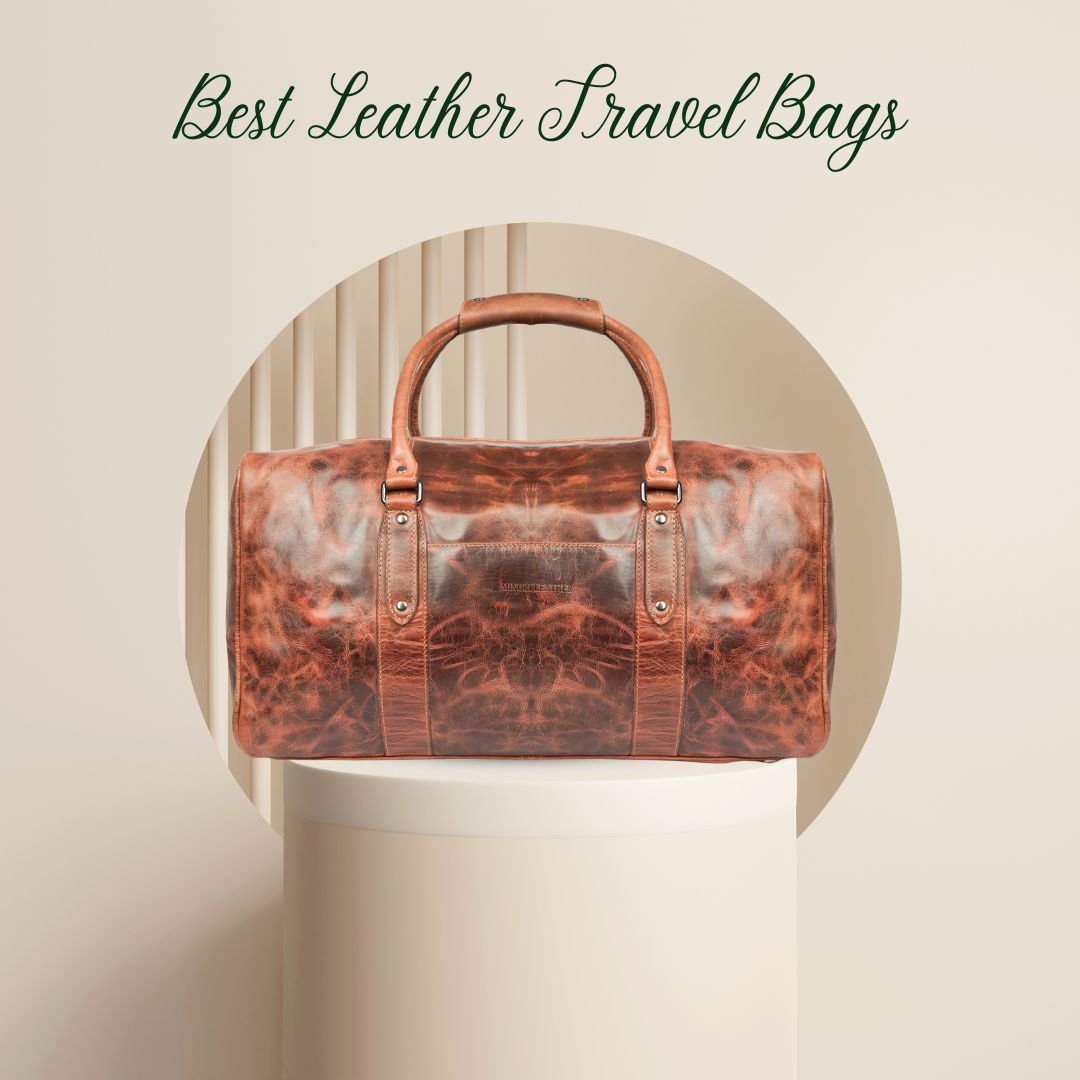
When you own a full grain leather bag, you're carrying a material that has been used by humans for thousands of years precisely because nothing else compares to it for durability. The natural grain is left completely intact, which means the fibers are tight, resistant to moisture, and built to withstand daily use for decades.
Our bags at Minori use oil pull-up leather — a specific type of full grain leather treated with oils that give it a rich, living quality. When you scratch it, the oils shift and the leather visibly "pulls up" to show lighter tones. When you rub it back, the color deepens. It's a material that responds to you.
That responsiveness is what creates the patina — the beautiful darkening and character that develops over months and years of use. A full grain leather bag doesn't just survive time. It transforms because of it.
Key characteristics of full grain leather:
• Retains the top, strongest layer of the hide — never sanded or corrected
• Develops a rich patina over years, becoming more beautiful with use
• Naturally breathable — prevents moisture and odour buildup
• Can be conditioned and repaired, extending life by decades
• Each piece is unique — natural markings make every bag one of a kind
What "Vegan Leather" Actually Is
The term "vegan leather" is a masterclass in marketing. It sounds natural, clean, ethical. In reality, the vast majority of vegan leather sold in the US market today is polyurethane (PU) — a plastic — coated onto a polyester base fabric. In other words, it's a petroleum-derived synthetic material.
Some newer plant-based alternatives exist: pineapple leather (Piñatex), cactus leather (Desserto), mushroom leather (Mylo). These are genuinely innovative and worth watching. But walk into any store selling a "vegan leather" bag under $400 today, and you are almost certainly holding plastic.
PU leather looks and feels great when new. The problem is what happens next.
How vegan leather ages:
• Year 1: Looks excellent — often indistinguishable from real leather at a glance
• Year 2-3: Coating begins to crack and peel at stress points — handles, corners, strap joins
• Year 3-5: Surface delamination — the plastic layer separates from the fabric base
• Year 5+: The bag is typically unwearable and discarded
This is not a quality issue with any particular brand. It is a material science issue. PU leather peels because it is fundamentally a plastic coating on a fabric — and coatings eventually separate. No amount of care prevents this.
The Real Sustainability Question Nobody Is Asking
The sustainability conversation in fashion has been hijacked by one question: what is it made of? But that's the wrong question. The right question is: how long does it last?
A bag you carry every day for 20 years is infinitely more sustainable than five bags you replace every few years. Longevity is the most honest measure of environmental impact — and by that measure, full grain leather wins decisively.
The 25-Year Comparison
|
|
Full Grain Leather Bag |
Vegan Leather Bag |
|
Lifespan |
20–30+ years |
2–5 years |
|
Bags needed over 25 years |
1 |
5 to 12 |
|
End of life |
Biodegrades naturally |
Plastic in landfill for centuries |
|
Repairability |
Yes — resole, recondition, restitch |
No — peeling cannot be reversed |
|
Gets better with age? |
Yes — develops patina |
No — degrades and peels |
|
Microplastic shedding |
None |
Yes — with every use |
One full grain leather bag used for 25 years versus five to twelve vegan leather bags discarded in the same period — the numbers speak for themselves. Fewer products made, fewer products thrown away, zero microplastic shedding from daily use.
And at the end of its long life, full grain leather biodegrades naturally. PU plastic sits in landfill for centuries. When you define sustainability by outcomes rather than labels, the answer is clear.
How Full Grain Leather Gets Better — Not Worse This is what separates full grain leather from every other material: it improves with use. Genuine patina is not a marketing term — it is a physical process. The natural oils in the leather, combined with the oils from your hands and daily contact, gradually darken and enrich the surface.
Scratches on a full grain leather bag don't look like damage. They blend into the character of the piece. The bag you carry every day for ten years has a depth and richness that a brand-new bag simply cannot replicate.
Our Minori oil pull-up leather takes this further. The pull-up effect means every mark you make is part of the story — a rubbed handle that's darker from use, a lighter patch where the bag rests on your hip, corner wear that shows the density of the leather beneath. These aren't flaws. They're proof.
"The bag doesn't just survive daily use — it gets better because of it."
Minori Leather Bags Built to Last a Lifetime
Every piece in our collection is made from premium full grain leather selected for its aging potential. Here are four bags that show what this looks like in practice:
Camille Leather Laptop Tote Bag
A structured, professional everyday tote designed for the commute that never ends. The full grain leather develops rich depth with every meeting, every journey. The more you carry it, the more it becomes yours.
Asheville Leather Crossbody Bag
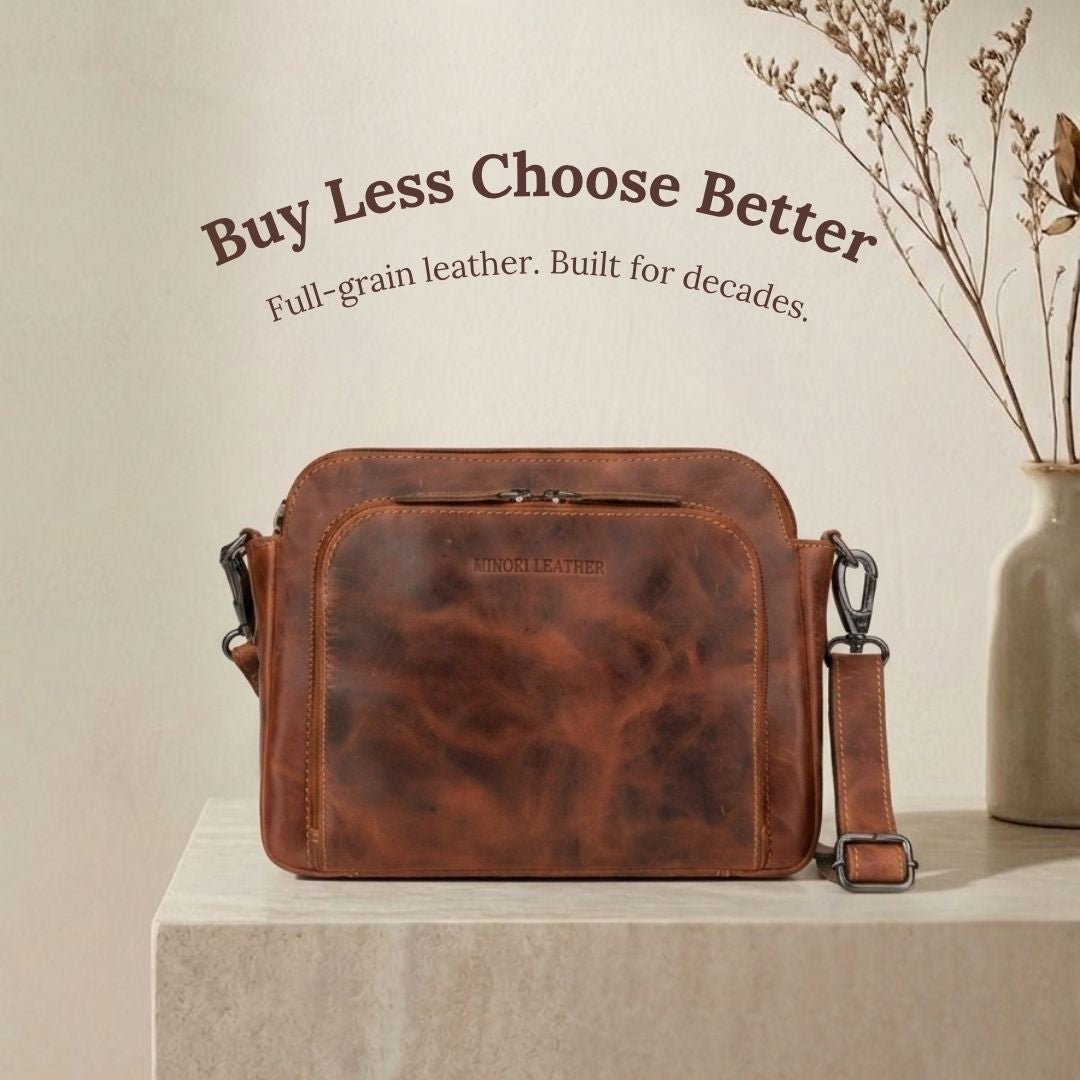
Lightweight and versatile for daily carry — this is the bag that gets softer, more supple, and more beautiful the more you reach for it. A true everyday companion that improves with every outing.
Vintage-inspired and built to work as hard as you do. This briefcase ages with unmistakable character — the kind of professional gravitas that only full grain leather can develop over years of use.
Selene Hobo Leather Shoulder Bag
Soft, elegant, and beautifully slouchy. The Selene gets more personally yours with every carry — softening to your body, darkening at the points you touch most, becoming irreplaceable in the way only quality leather does.
Frequently Asked Questions
Does vegan leather last as long as real leather?
No. Most vegan leather (PU-based) lasts 2–5 years before cracking and peeling. Full grain leather, with basic care, lasts 20–30+ years. The difference is material science — PU is a plastic coating that delaminates over time, while full grain leather is a solid natural material that strengthens with age.
Is vegan leather actually more sustainable than real leather?
Not when you measure by longevity — which is the only honest metric. Most vegan leather is petroleum-based plastic that sheds microplastics with every use and ends up in landfill for centuries when it peels and gets discarded. A single full grain leather bag lasting 25 years replaces 5–12 vegan leather bags over the same period — dramatically less waste, less energy, less resource consumption overall.
Oil pull-up leather is a type of full grain leather that has been treated with oils and waxes during tanning. When the surface is scratched or pressed, the oils migrate and the leather lightens — this is the "pull-up" effect. Rubbing the surface redistributes the oils and restores colour. It develops an exceptionally rich patina over time and is particularly responsive to daily use.
How do I care for a full grain leather bag?
Basic care is simple: keep it away from prolonged rain, condition it with a quality leather conditioner 2–3 times per year, and store it stuffed with tissue paper when not in use to maintain its shape. That's genuinely all it takes to keep a full grain leather bag beautiful for decades.
What's the difference between full grain and top grain leather?
Full grain uses the complete top layer of the hide with all natural markings intact — it's the strongest, most breathable, and most durable grade. Top grain has been lightly sanded to remove imperfections, which creates a more uniform look but removes the strongest fibers and reduces the bag's ability to develop a true patina.
Why are full grain leather bags more expensive?
Because they use the best part of the hide, require more skilled craftsmanship, and are built to last decades rather than seasons. The upfront cost is higher — but a full grain leather bag that lasts 20 years costs less per year than a vegan leather bag replaced every 3–4 years.
Ready to Own a Bag That Gets Better With Time?
At Minori Leather, we don't make bags for this season. We make bags for the next twenty years of your life — pieces that reward you daily and still turn heads a decade from now.
When you choose quality that lasts, sustainability isn't a trend. It's simply common sense.