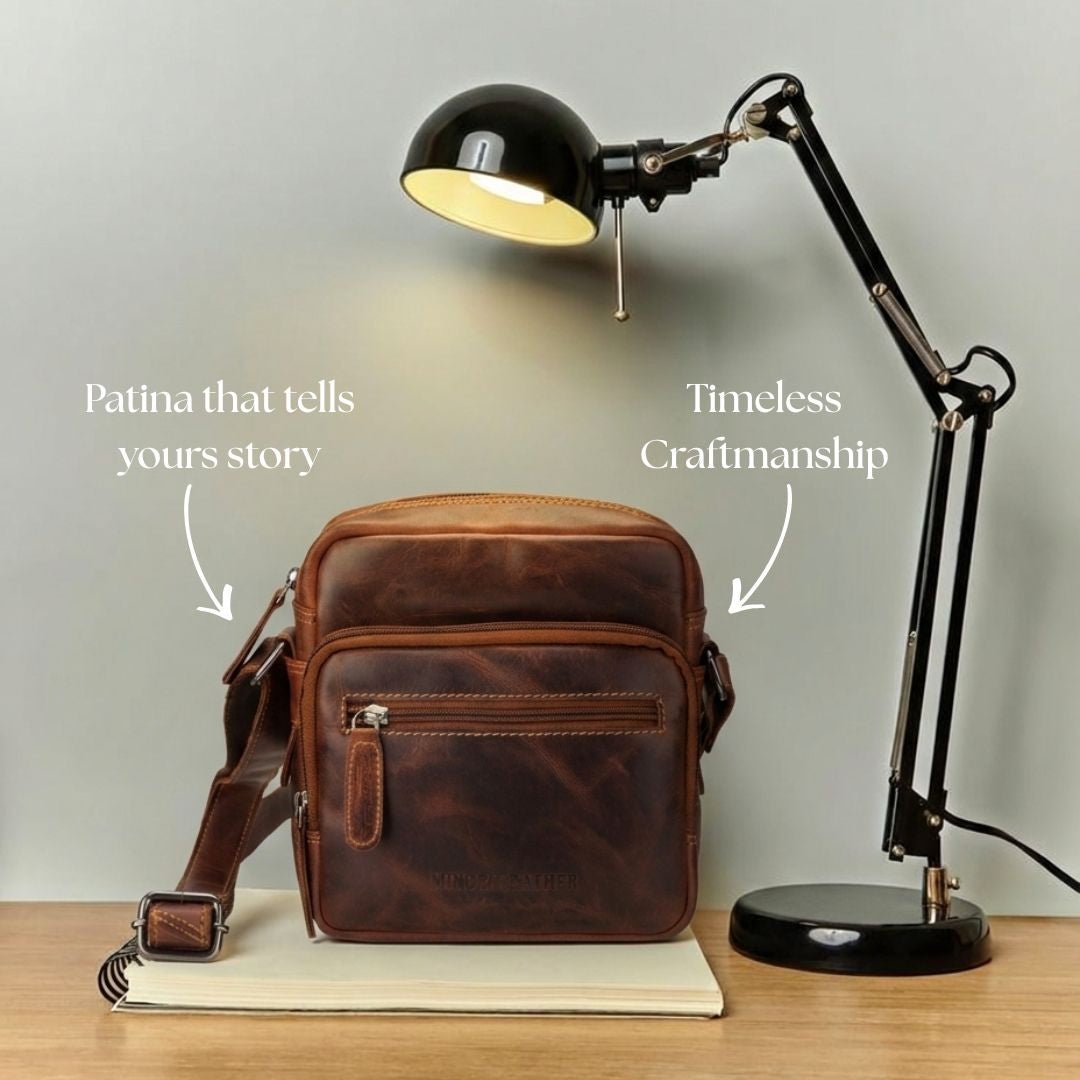
Full-Grain Leather Patina: How It Forms (and Why You’ll Love It)
At Minori Leather, we craft pieces from premium full-grain leather because the best accessories don’t just last—they evolve. Over time, your leather wallet, tote, or backpack changes in a way that’s unmistakably personal: the color deepens, the surface develops a soft sheen, and subtle character lines appear where life naturally touches it.
That transformation is called patina—and it’s one of the most beautiful (and most misunderstood) parts of owning quality leather.
If you’ve ever wondered why your leather looks richer after months of use, how long patina takes, whether scratches “ruin” leather, or how to get an even patina without damaging the finish, you’re in the right place.
Shop patina-ready pieces:
→ Shop Full-Grain Leather Bags
→ Shop Wallets & Accessories
What Is Leather Patina?
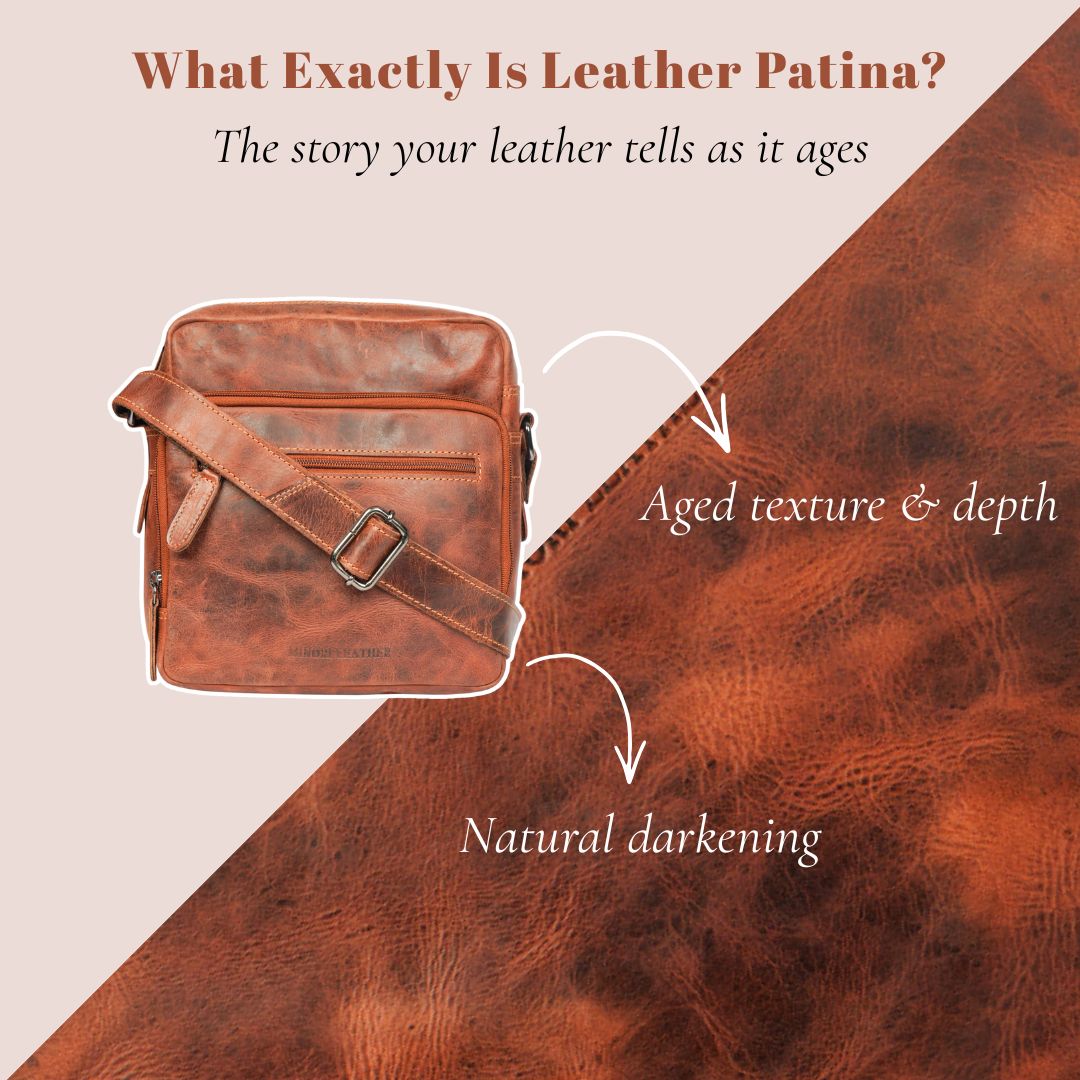
Leather patina is the natural change in color, texture, and sheen that happens as leather interacts with your daily life. It’s not a factory finish or a coating—it’s a gradual, organic shift driven by:
-
hand oils
-
friction and handling
-
air exposure
-
sunlight
-
time
The biggest reason patina is so loved: it makes each leather piece look more luxurious and more uniquely yours as the months go by.
A brand-new leather item often looks uniform and “perfect.” Patina is what turns that uniformity into depth—like the difference between flat color and a warm, dimensional tone.
Patina vs. Wear: What’s the Difference?
This is the key distinction that helps customers feel confident buying full-grain leather.
Patina (good aging)
Patina is healthy, natural aging. It typically looks like:
-
slightly deeper color in high-touch areas
-
a soft, natural glow
-
fine character lines that blend into the surface
-
leather that feels more supple with time
Wear (material breakdown)
Wear is failure—often from poor materials or heavy coatings. It can look like:
-
cracking or flaking
-
peeling finishes
-
“plastic shine” that never changes
-
stiff, dried-out leather fibers

Patina is leather improving. Wear is leather breaking down.
Why Full-Grain Leather Develops the Best Patina
Patina shows up most beautifully on full-grain leather because full-grain retains the hide’s original grain structure and natural pores. It’s minimally processed, which means it can:
-
absorb oils gently
-
breathe
-
develop color depth over time
-
soften naturally with use
Lower-quality or heavily processed leathers often can’t do that.
What doesn’t patina well (and why)
-
Faux/synthetic leather: doesn’t absorb—often cracks or peels
-
Corrected/top-grain with coatings: coatings can block oils and limit patina
-
Bonded leather: made from scraps + binders; tends to degrade rather than evolve
If you want that rich, heirloom look that gets better year after year, full-grain is the material that delivers it.
How Leather Patina Forms (Step by Step)
Patina isn’t random—it’s a predictable process. Here’s what’s happening as your leather ages.
1. Oils from Your Hands & Daily Use (Weeks to Months)
Your skin's natural oils transfer every time you handle your bag or wallet. These oils condition the leather from within, darkening high-touch areas like edges, corners, and straps first. Friction from carrying or opening adds subtle shine.
2. Exposure to Sunlight & Air (Months to Years)
UV rays oxidize the dyes naturally, shifting lighter tones (like our warm chestnut) toward deeper browns or caramels. Air and minor moisture help the fibers settle, creating a richer depth without brittleness.
3. Scratches, Marks & Wear (Ongoing)
Light scuffs and marks appear early on, but on full-grain leather they don't stay sharp—they blend in as the oils pull them smooth. Over time, these become part of the patina's character, not damage.
4. Conditioning & Care (Enhances the Process)
Regular light conditioning (with a quality leather balm) keeps the leather supple while allowing patina to build evenly. Over-conditioning can slow it down, but proper care strikes the perfect balance.
The result? A piece that starts uniform and new, then becomes uniquely yours—darker in high-use spots, lighter in protected areas, with a soft, lived-in elegance.
How Long Does Leather Patina Take?
This is one of the most searched questions, so it’s worth answering clearly.
Patina can begin within weeks, but the most noticeable change typically shows up over months.
A realistic patina timeline
-
Day 1 (New): uniform color, matte finish, clean look
-
1–3 months: early darkening where you touch it most
-
6–12 months: visible warmth + developing sheen in high-use areas
-
1–2 years: richer, deeper tone; blended marks; unmistakable character
Wallets usually patina faster than bags because they’re handled multiple times per day. Bags and backpacks develop patina more gradually, often with deeper, more dimensional results.
→ Want faster patina? Start with a daily-carry wallet
→ Prefer slow, rich aging? Explore structured totes
What Affects How Fast Patina Develops?
Patina isn’t one-size-fits-all. These factors change the speed and look of patina:
-
Frequency of use
Daily carry = faster patina. Rotating items = slower patina. -
Your skin chemistry
Natural oils vary person to person. Some people see quicker darkening. -
Climate and humidity
Dry climates may require slightly more conditioning to prevent dryness. -
Sunlight and air exposure
Normal exposure enhances depth. Prolonged direct sun can cause uneven darkening. -
Leather color and finish
Lighter tones usually show more visible change. -
Care routine
Gentle, consistent care helps keep patina even and healthy.
How to Develop a Beautiful Patina (Without Ruining the Leather)
You don’t need hacks. The best patina comes from normal use and light care.
Do this
-
Use it consistently (patina loves routine)
-
Wipe dust with a soft cloth weekly
-
Let it air out after use
-
Condition lightly every 3–6 months (depending on climate/use)
-
Store properly: cool, dry area; avoid sealed plastic storage
Avoid this
-
heavy oils that can cause blotches and dark stains
-
harsh cleaners or alcohol wipes
-
over-conditioning (can attract dirt and slow natural evolution)
-
heat drying (radiators/hair dryers) which can dry and stiffen leather
Quick fix: uneven patina
If you notice darker spots:
-
use the item more evenly (switch hands/shoulders)
-
wipe gently with a dry cloth
-
apply a small amount of conditioner and buff lightly
Why Patina Is Beautiful (and Why Customers Love It)
Patina is more than “aging.” It’s a form of personalization that can’t be replicated by machines.
A piece with patina looks:
-
more dimensional
-
warmer in tone
-
naturally glossy (not shiny/plastic)
-
distinctly yours
That’s why people often say their best leather items “get better with time.” Patina is the proof.
FAQ: Full-Grain Leather Patina
Does full-grain leather scratch easily?
Full-grain leather can show marks early, but many scuffs soften and blend as patina develops. That’s part of its character.
Can you speed up leather patina safely?
The safest method is daily use + light conditioning. Avoid heavy oils or “shortcuts” that can stain or create uneven patches.
How often should I condition full-grain leather?
Typically every 3–6 months, depending on climate and how heavily you use the item.
Is patina permanent?
Patina is a natural evolution. You can clean and condition leather, but you generally won’t “reset” it to factory-new—and most people wouldn’t want to.
Why does my leather look uneven?
Uneven patina usually comes from uneven handling, storage, or exposure. Using the piece more evenly and applying light conditioning often helps.
Embrace the Journey
Full-grain leather patina is a beautiful reminder that quality isn’t static—it’s something you build over time. A great leather piece starts out clean and uniform, then becomes warmer, richer, and unmistakably personal.
If you’re ready to invest in leather that ages beautifully:
→ Shop Full-Grain Leather Bags
→ Shop Wallets & Accessories